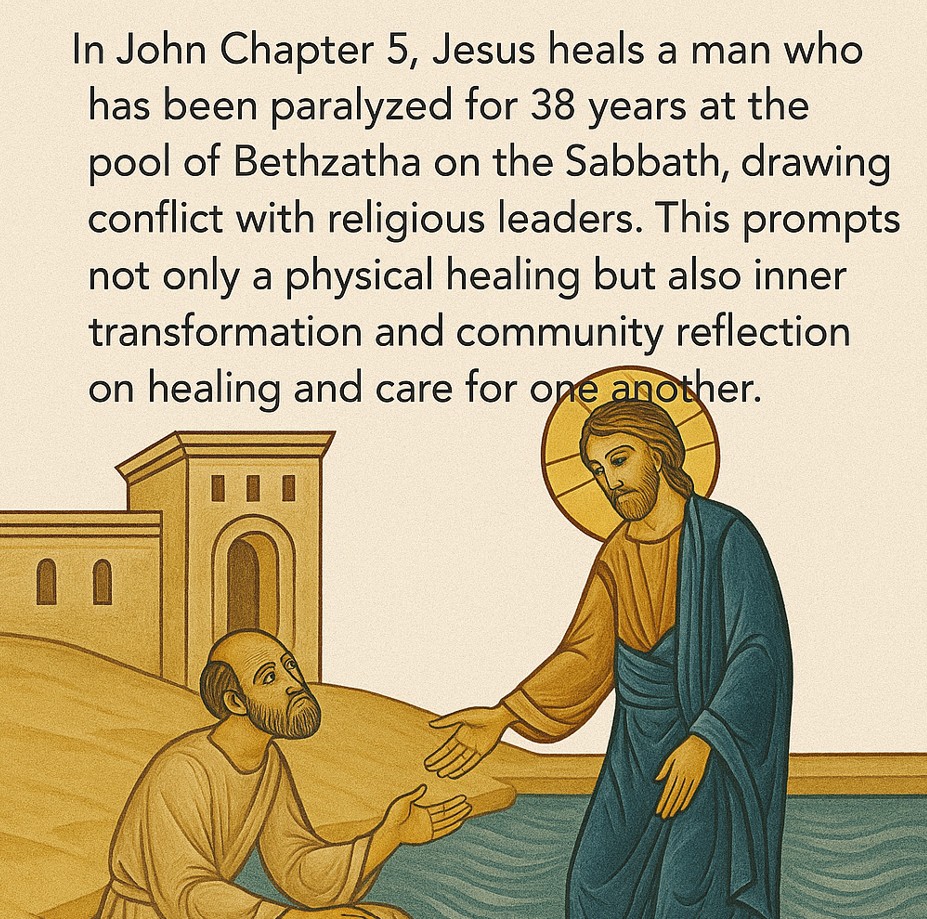
In John Chapter 5, Jesus heals a man who had been paralyzed for 38 years near the pool of Bethzatha in Jerusalem. This act takes place on the Sabbath, which immediately places Jesus in conflict with religious authorities. The story highlights not just the miracle, but also the setting — a place where people hoped for healing whenever the waters were stirred. Ancient texts and scribal additions, like the mention of an angel stirring the waters, help explain the cultural belief behind the scene. The man’s long-term condition is central to the story, raising the profound question Jesus asks: “What do you want?” — a question that challenges both the man’s identity and readiness for change after so many years of living with his condition.
The reflection digs deeper into the human experience, suggesting that like the paralyzed man, all people develop survival strategies throughout life — especially in childhood — that shape how we respond to the world. These tactics may serve us well at first but can later become obstacles when they are no longer needed. Emotional, intellectual, or behavioral patterns that once protected us can hinder growth and healing. Therapists often help individuals trace these patterns back to their roots, allowing them to reinterpret their past and find new ways of being. The story then becomes less about physical healing and more about inner transformation — about readiness to change, let go, and begin anew.
Finally, the story offers powerful lessons for community life. It calls for moving beyond passive waiting toward intentional support and compassion. In a competitive world where everyone seeks healing and fulfillment, community must be built on care, inclusion, and interdependence. The church and society alike are challenged to create spaces where healing can occur — not just physically but emotionally and spiritually. The question, “What do you want God to do for you?” becomes an invitation for self-awareness, shared responsibility, and collective transformation.